Physics 105 - How Things Work - Fall, 1998
Problem Set 1
- Due Monday, September 21, 1998, in class
- If you need to turn in any assignment early (or late), put it in the padlocked box outside room 133.
- Please answer each problem as thoroughly and precisely as possible. For example, for Case 13, part C, don't just say "goes up" or "goes down." Rather, say "goes at constant speed until…." or "speed starts at …increases uniformly with time until…"
- The more concise and exact you are with your answers, the more credit you'll receive. This does not mean you should be verbose! To the contrary, you should think carefully before you begin to write.
- You may discuss the problems with one another but you must write them up separately and in your own words.
- Write your name and ID# clearly and legibly on the top of each page that you turn in, and staple them together. If you do not, you may not receive full credit.
- Chapter 1, Case 13a-e (Pg. 74)
- Chapter 1, Case 20a-e (Pg. 75 - 76)
- Chapter 1, Case 23a-g (Pg. 76)
- Ex. 16 page 20
- Ex. 24 page 20
- Ex. 32 page 34
- Ex. 12 page 50
- Ex. 18 page 50
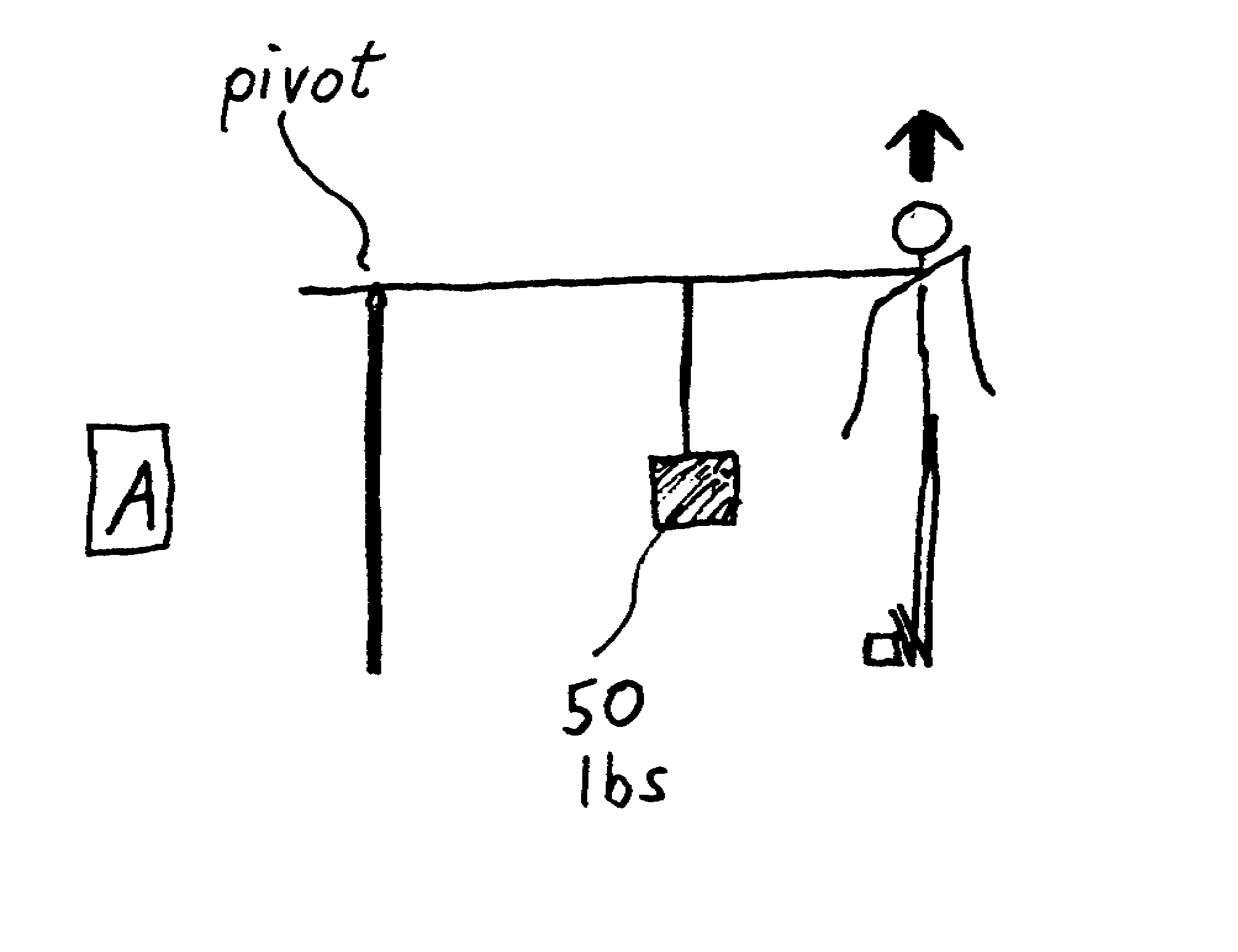
- Refer to drawing A (below), which is supposed to represent a "calf machine." By making measurements directly from the drawing, determine the upward force the weight lifter is exerting when lifting the 50-pound weight. Explain your method.
- Refer to drawings B-E (below). For each of these, answer the following: (I) If the cable is pulled a distance of one foot, how far does the 50-pound weight move? (II) In pulling the cable one foot, how much work do you do, and how much work is done on the 50-pound weight (in foot-pounds)? (III) With what force must you pull the cable to hold the 50-pound weight at a steady height? to raise it at a constant speed?
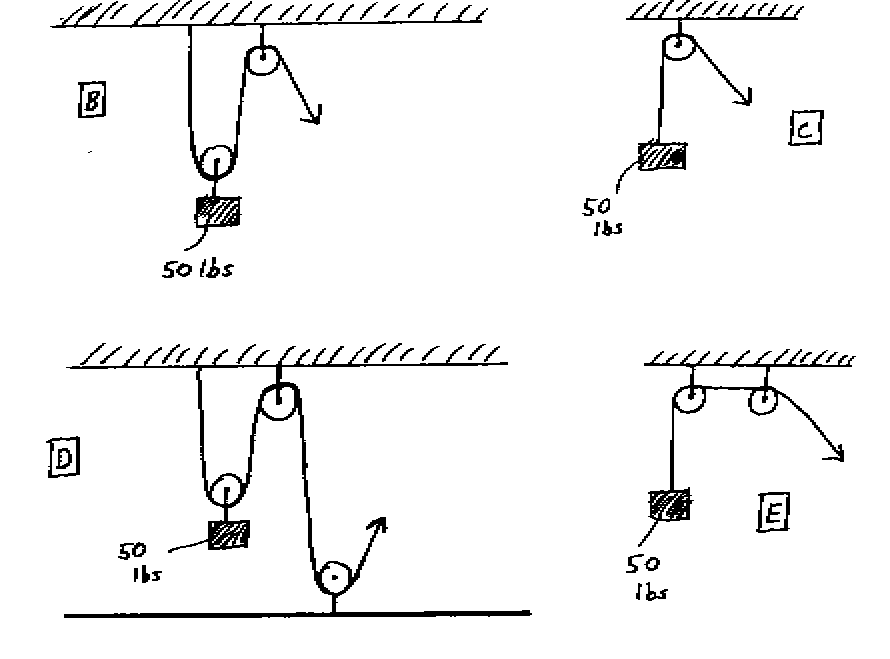
(The drawings are available outside my office, room 134, if you would like a "hard copy.")